WALUMI

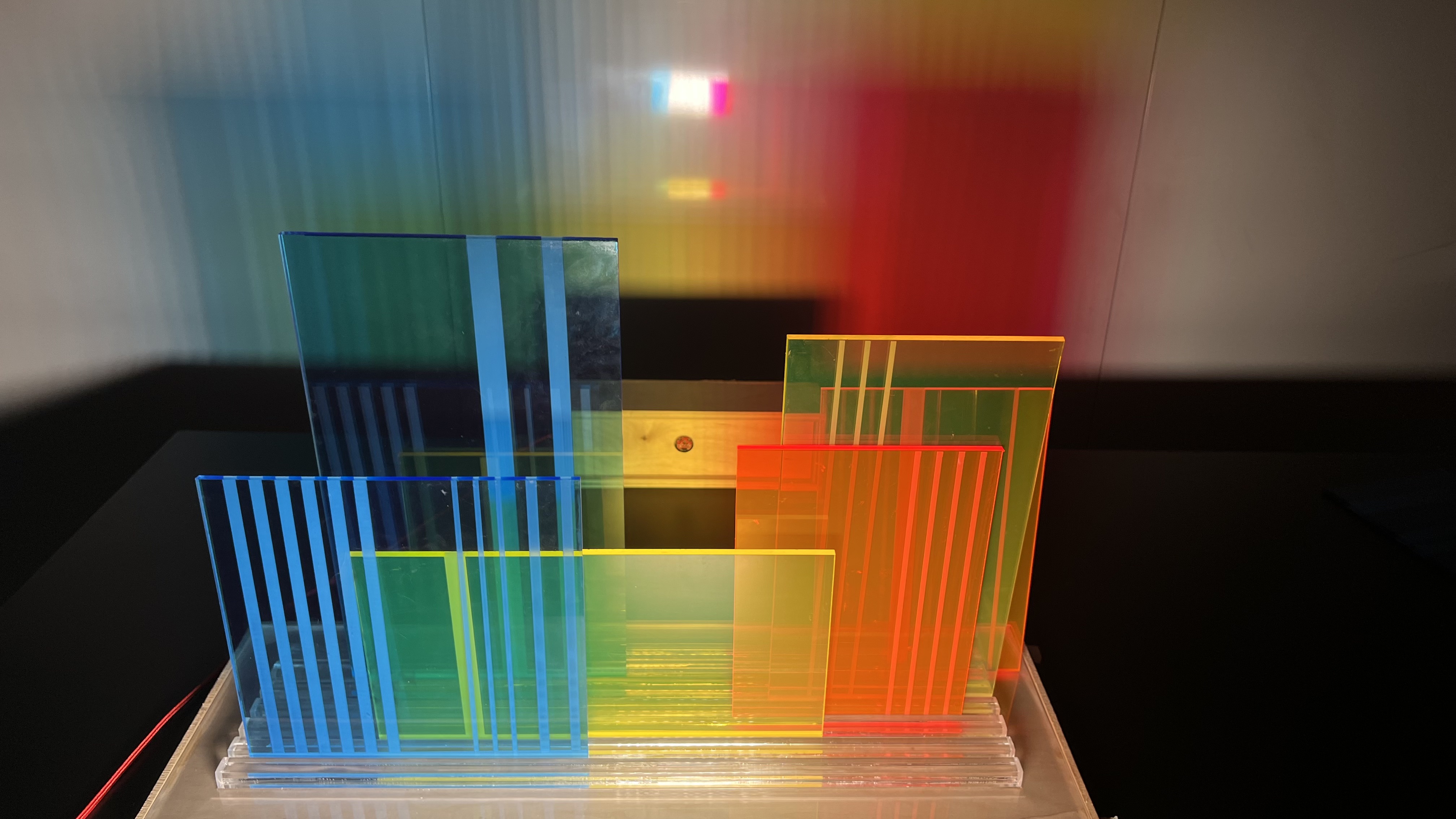
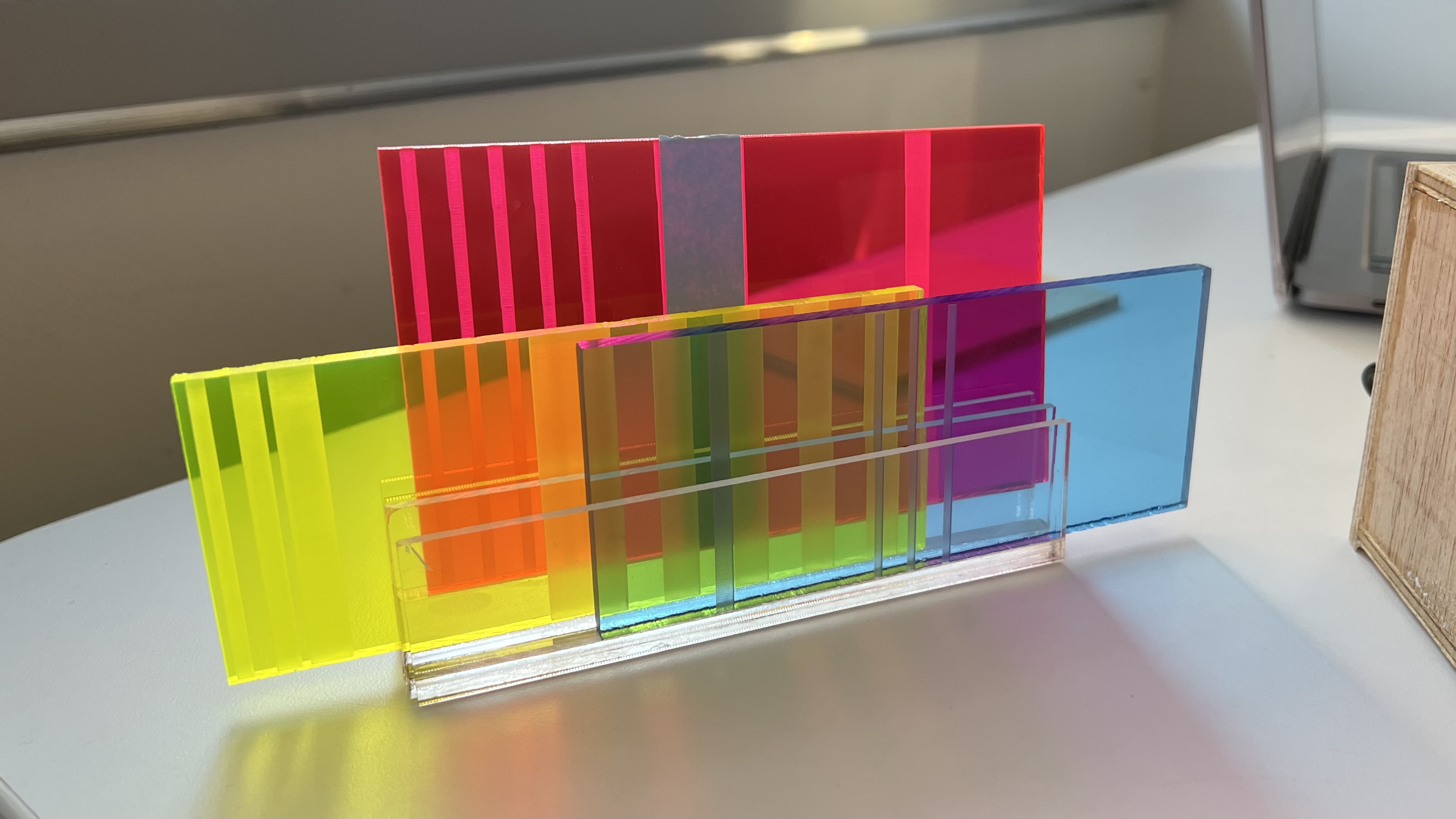
Walumi is an instrument which combines the theories of subtractive sound and color synthesis, inviting users to explore these concepts through a playful interaction.

You can hear the color and see the sound.
Team
Lucy, Wallis, Michal
Materials
LED, Acrylic Plastics, Wood,Wood Glue, Acrylic Glue, Wires, Micro USB,
Software
MacBook Pro, Arduino Nano Iot, Color Sensor, Mosi Library, Max MSP, Laser cutter
Project Overview
Walumi blends subtractive sound and color synthesis concepts into a playful interactive instrument. This design encourages participants to actively engage with color mixing and its associated soundscapes, enhancing their grasp of these principles through an immersive, playful experience.
Technical Functionality
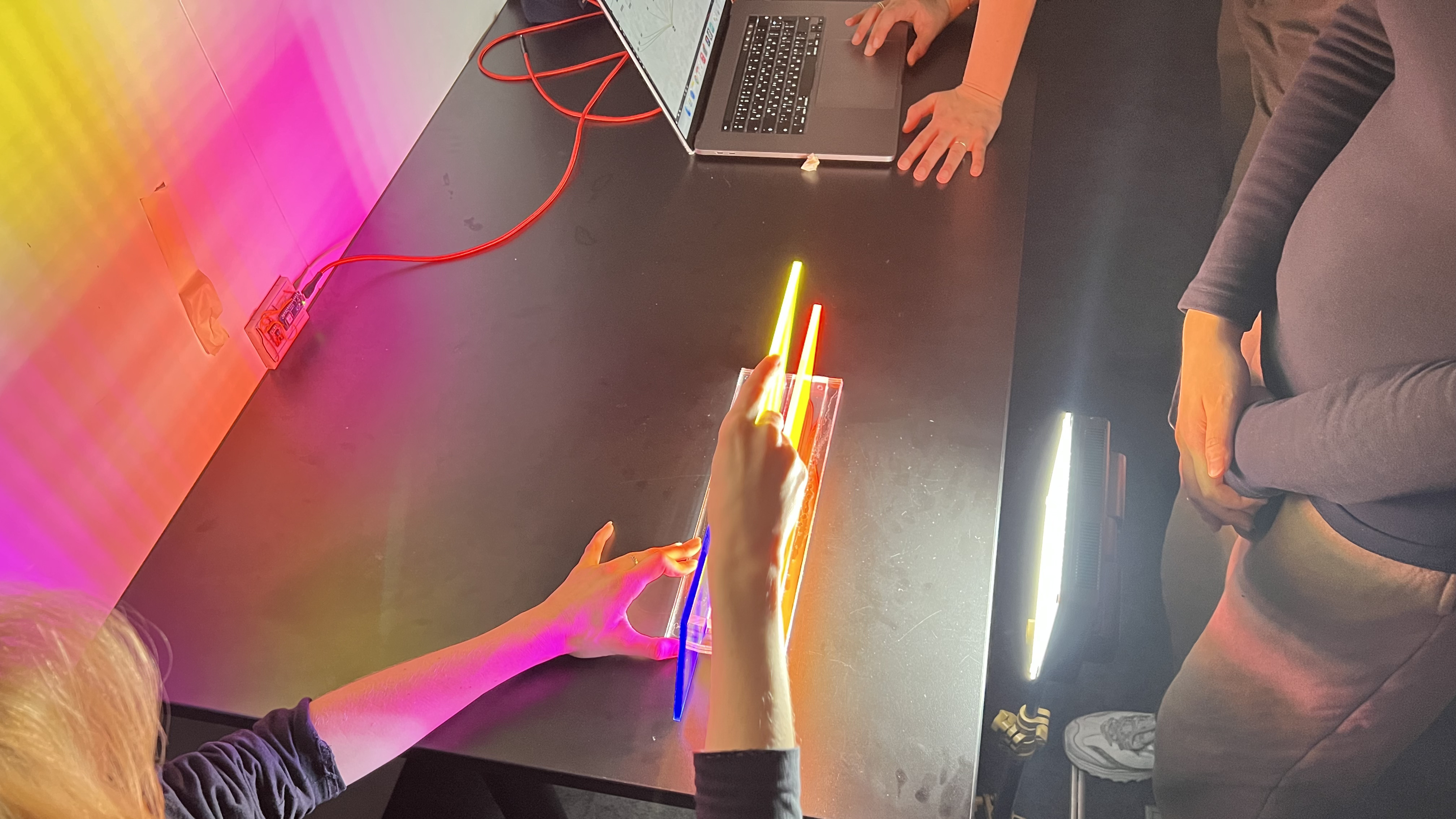
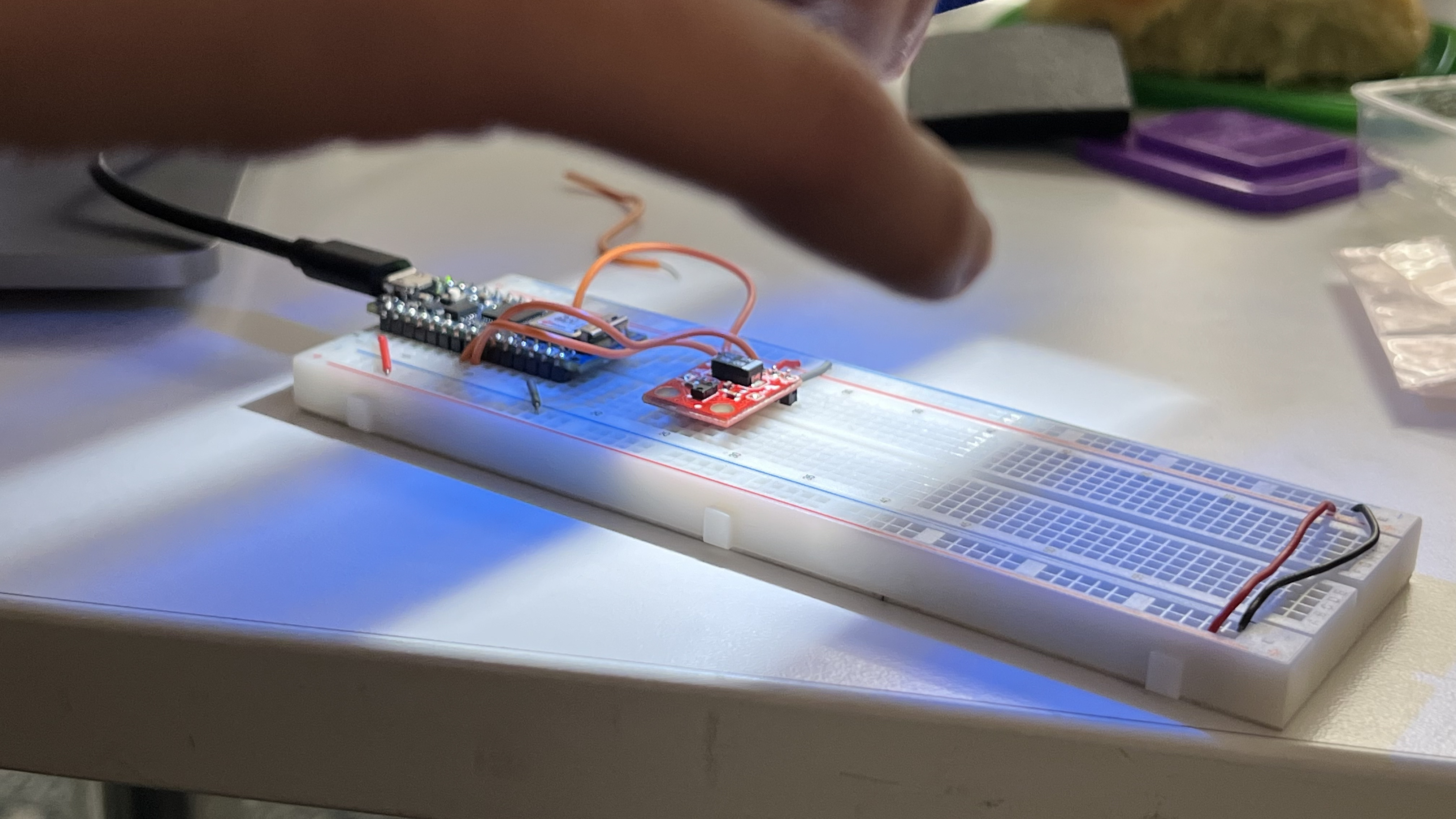
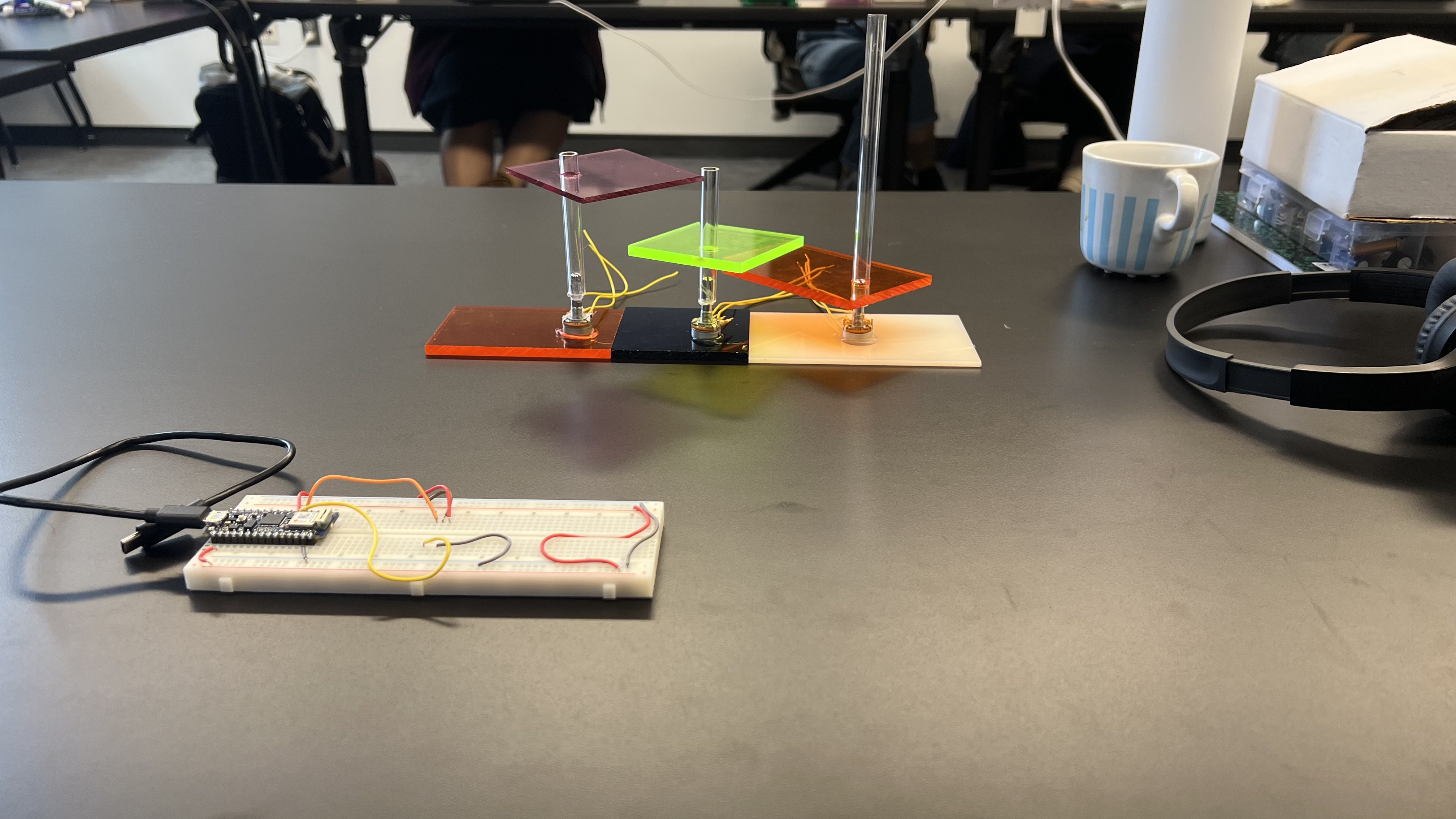
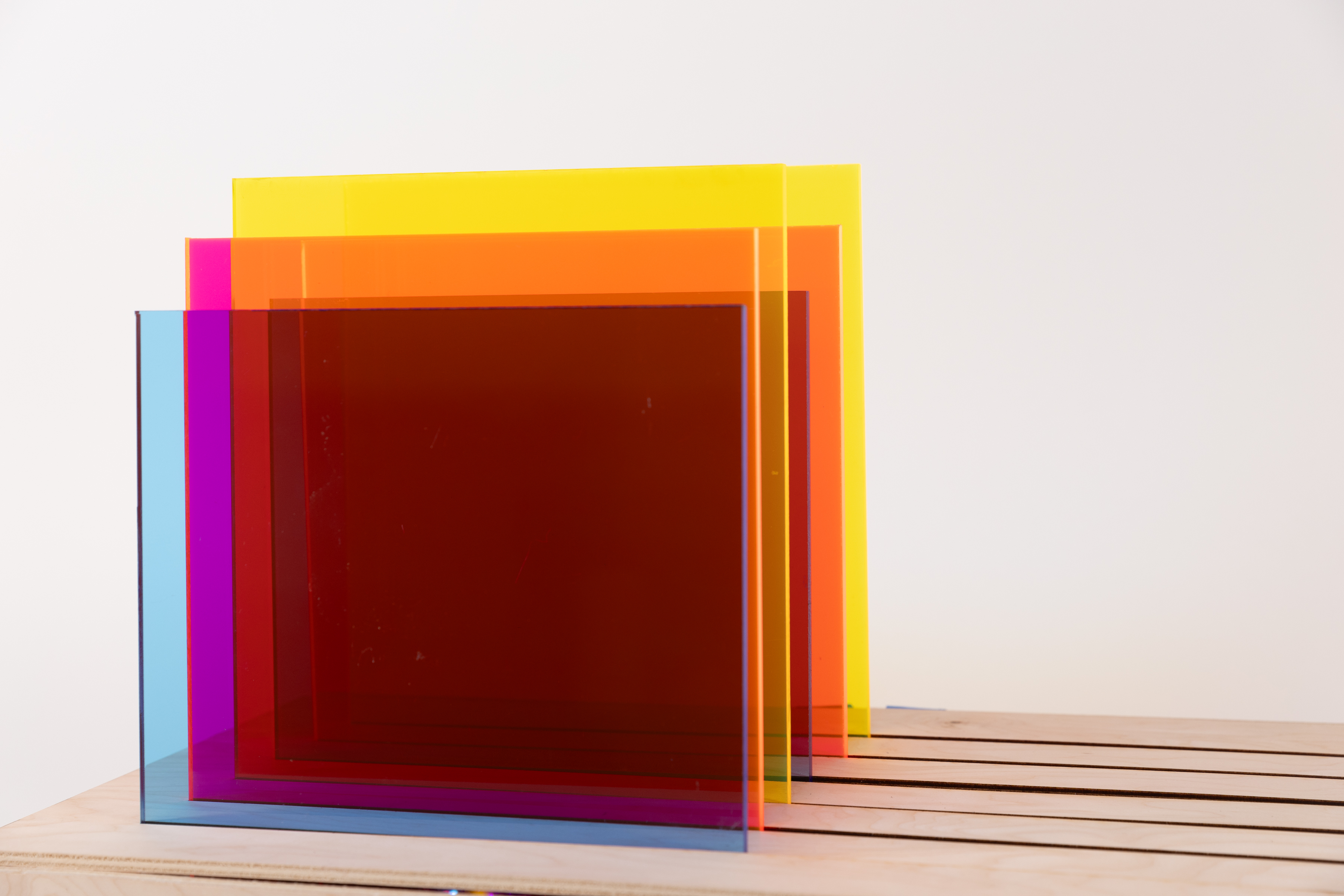
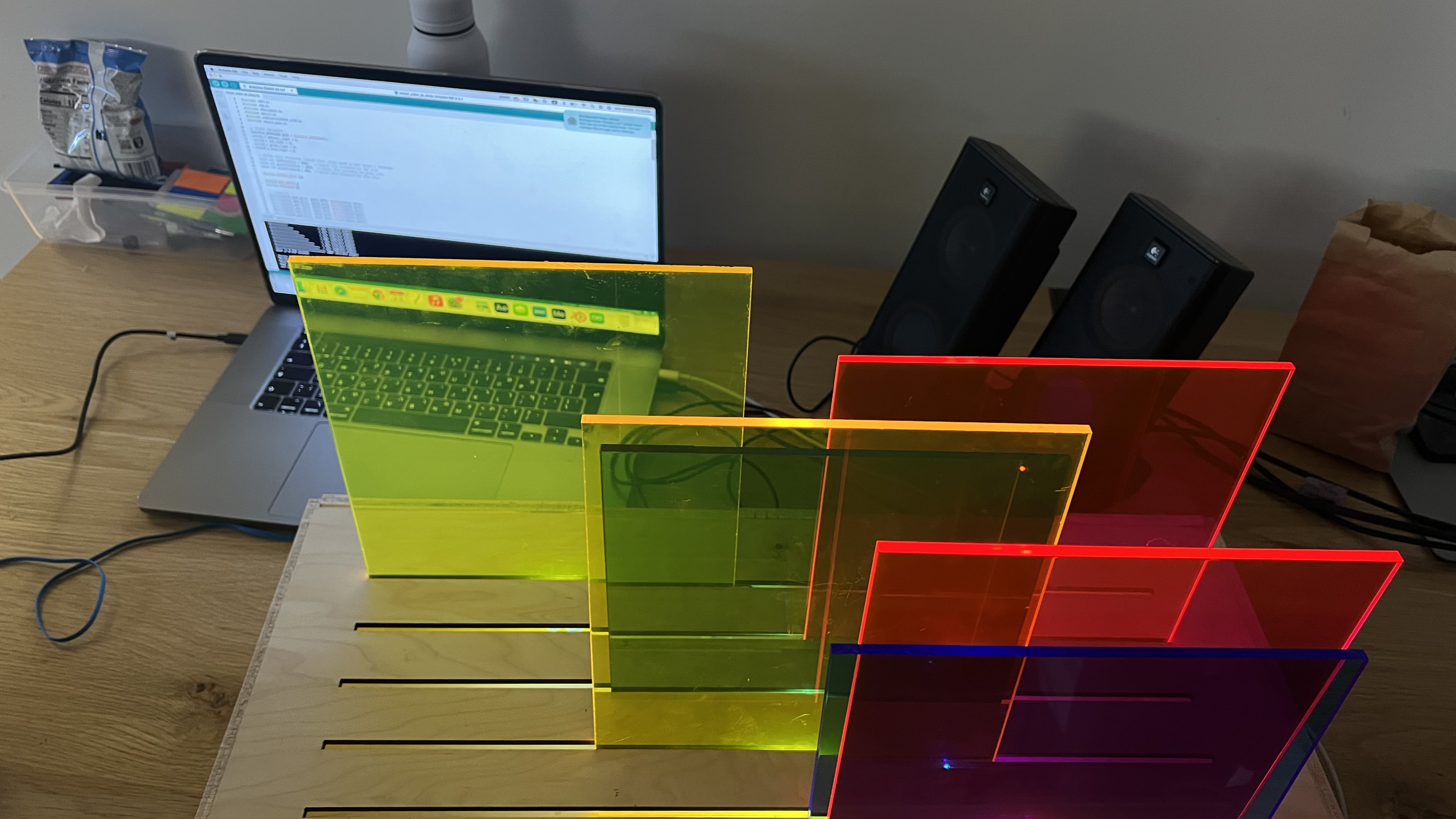
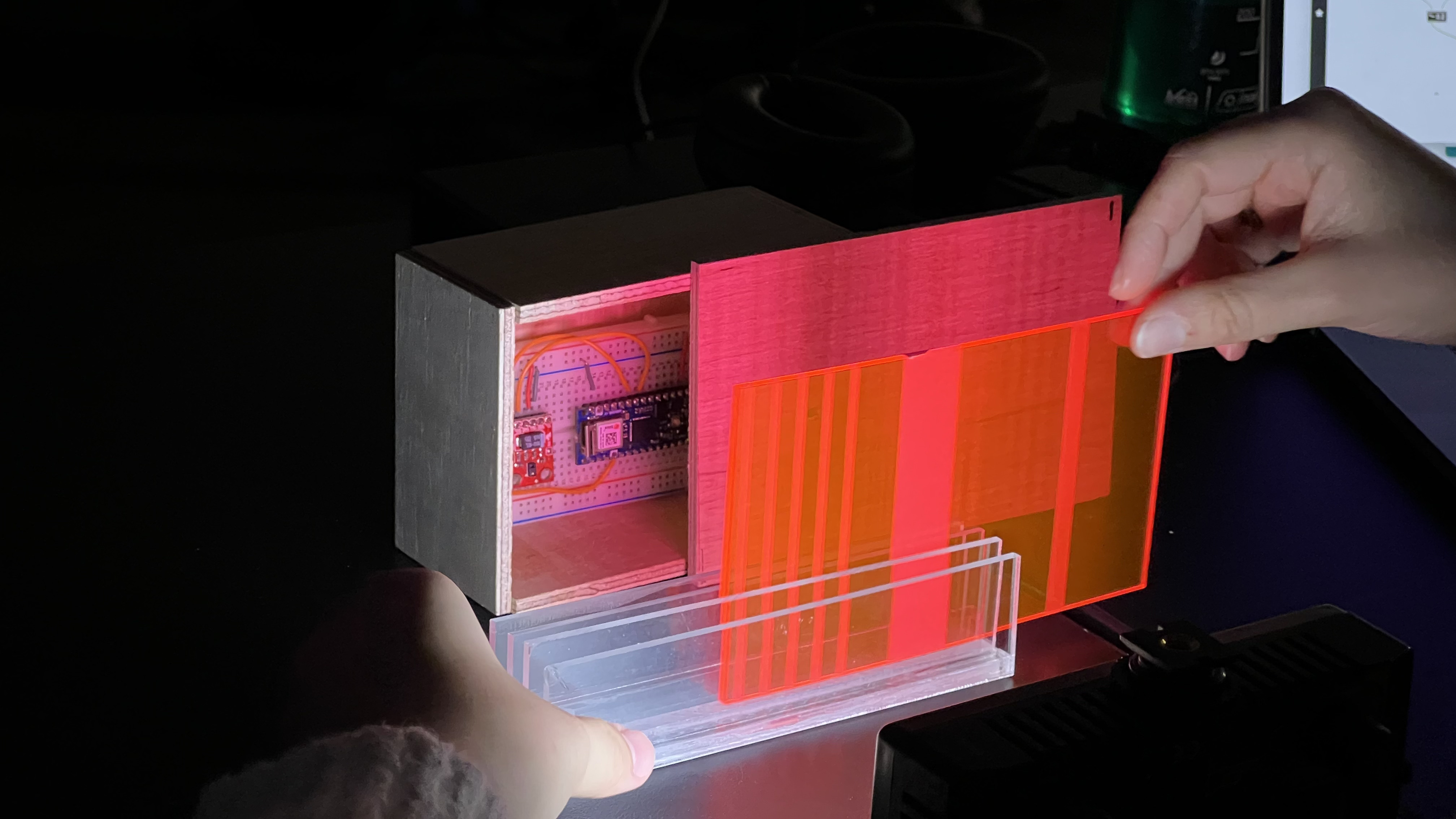
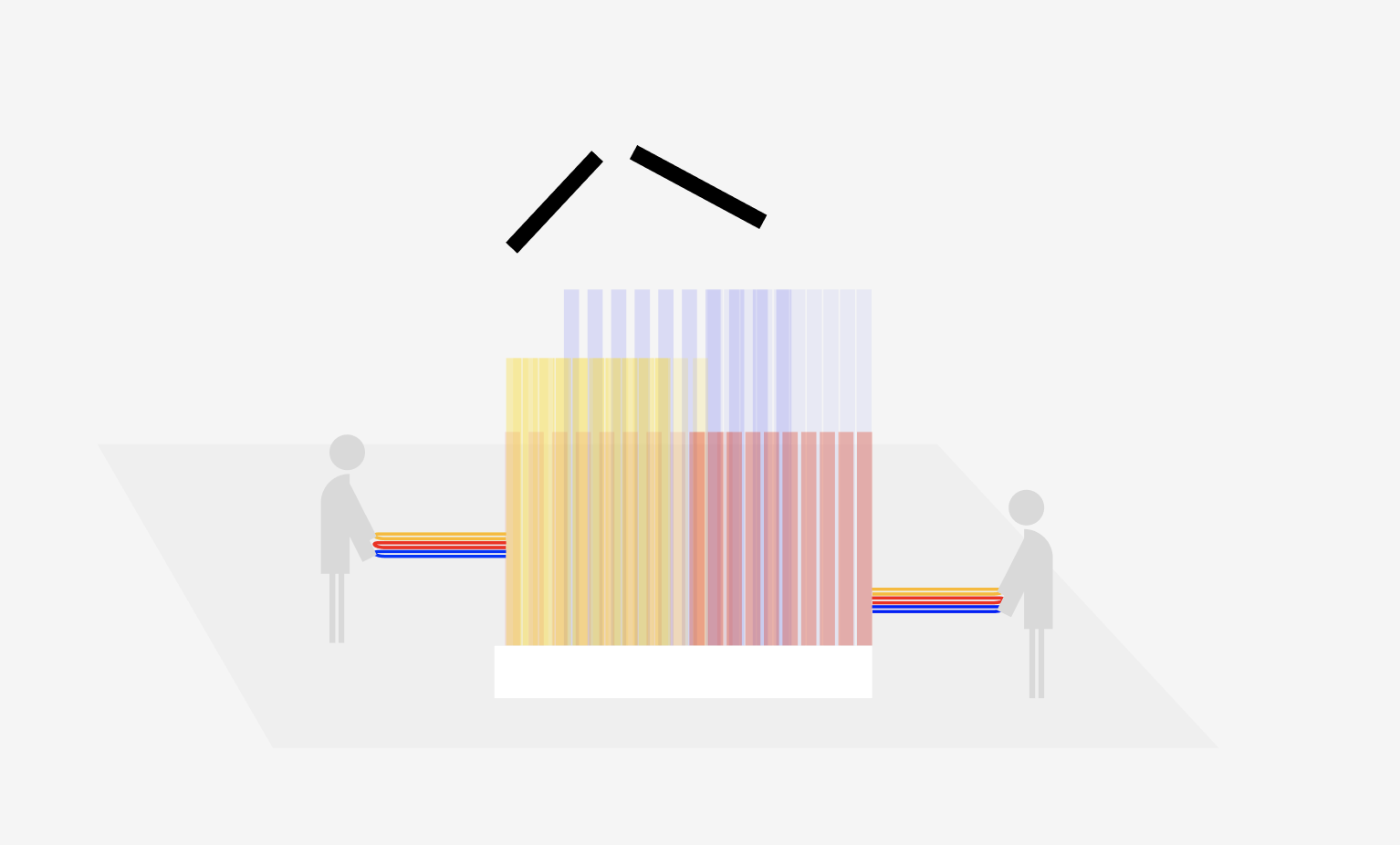
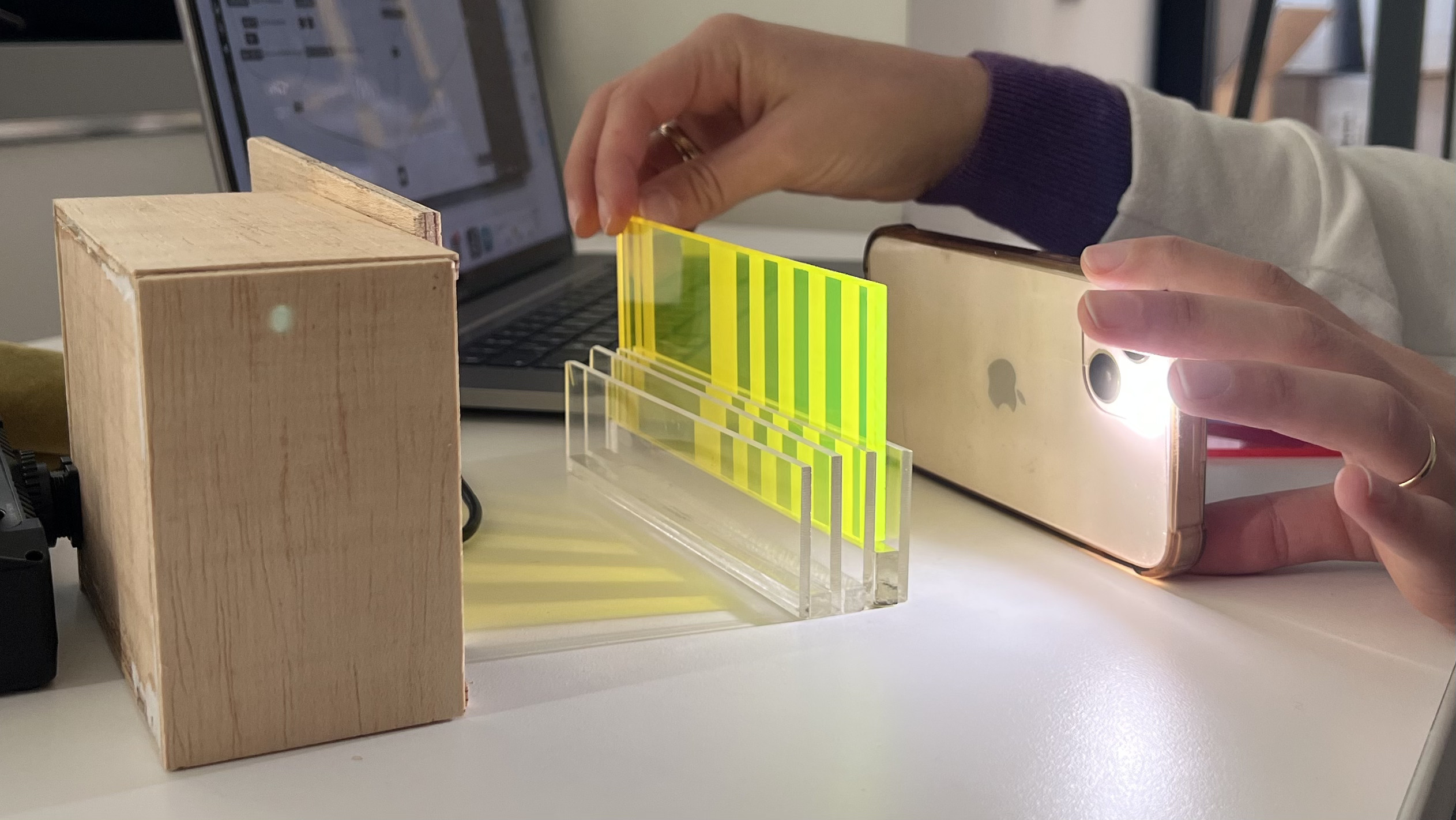
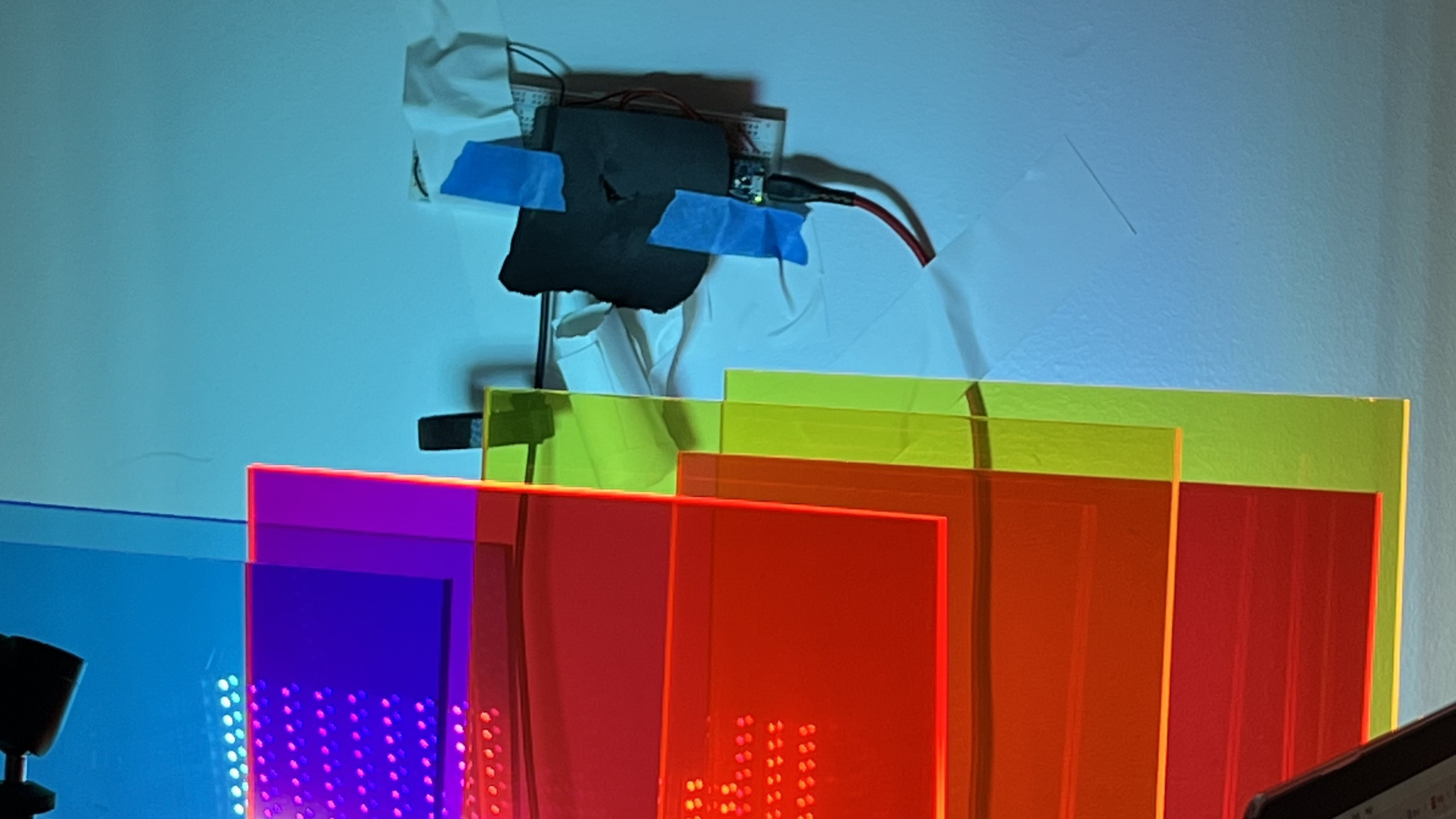
Participants move and play with acrylic sheets, which function as light filters, to selectively change which wavelengths of light, the RGB sensor is reading. These sheets, when placed between a light source and an RGB sensor, dictate the RGB light levels detected. The sensor feeds these readings into an Arduino, which then communicates the values to MAX MSP via serial transmission. Within MAX MSP, we map each color and their combinations to a distinct frequency array. These arrays orchestrate the resulting sound experience, emulating subtractive sound synthesis by filtering out specific frequencies, as new colors emerge through the users' interactions, creating a feedback loop.

Process

1. Ideation
During the genesis of our project, the ideation phase served as our creative crucible, igniting the spark of innovation and guiding our conceptual journey. Each member of our team brought their unique perspective to the table, melding our collective expertise into a cohesive vision.
As an industrial designer, my focus naturally gravitated towards the visual aspect of our creation. Together, we embarked on a collaborative exploration, delving into the intricate interplay between color, sound, and interaction.
2. Prototyping and Testing
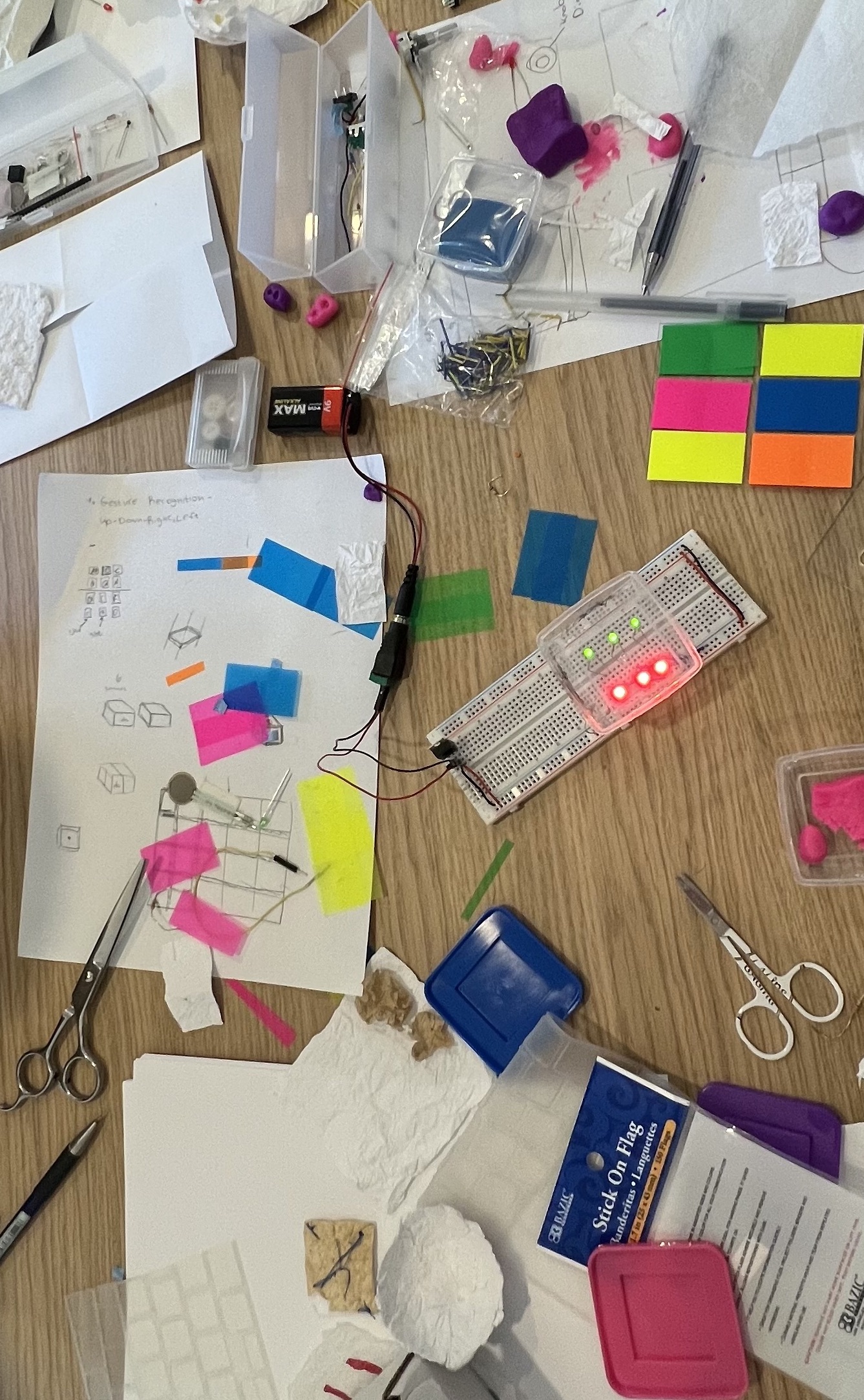
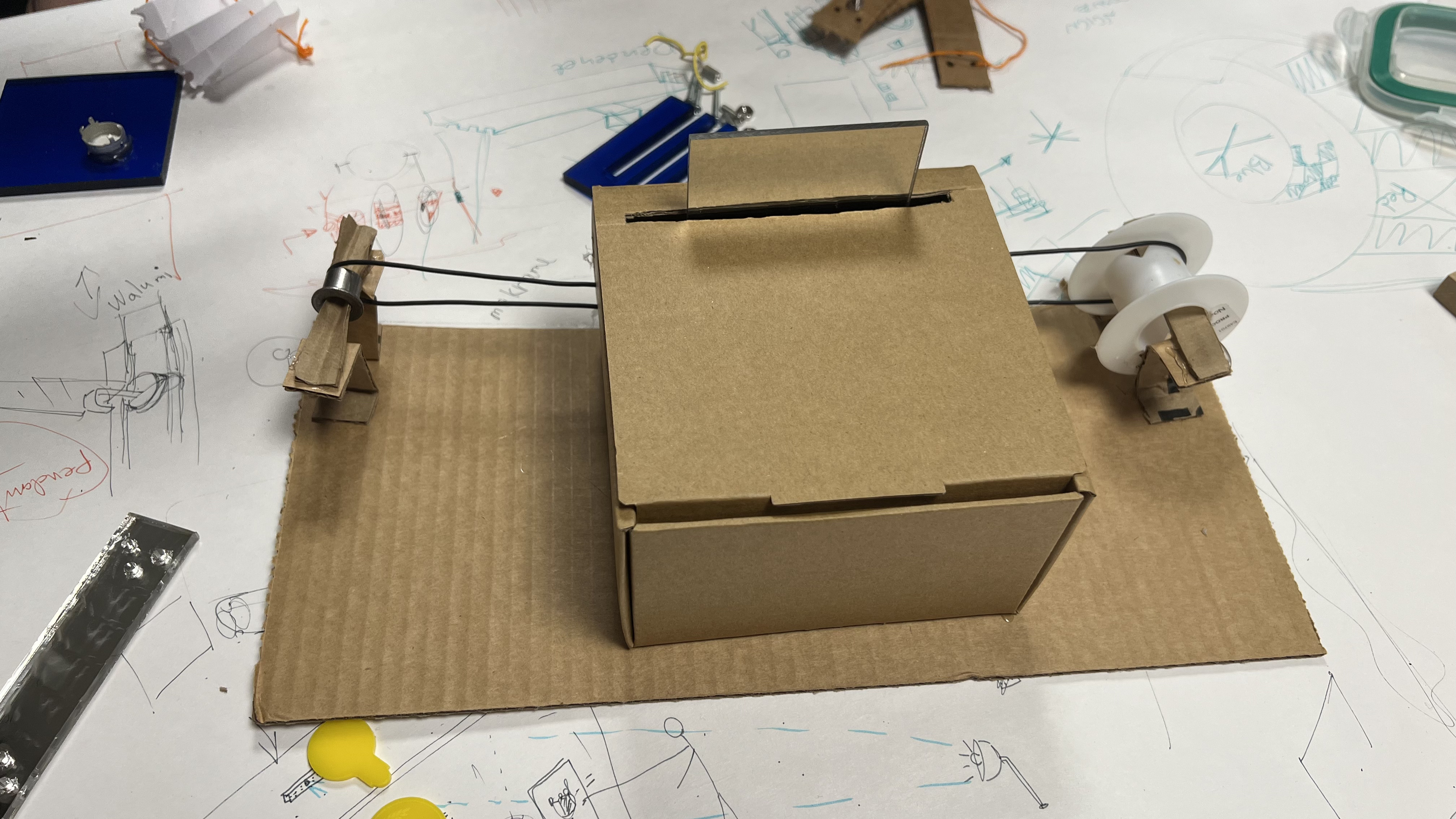
During the prototyping phase, our journey was marked by a spirit of experimentation and innovation. To breathe life into our conceptual ideas, we turned to humble materials like cheap plastic containers and colorful paper, embracing the ethos of "making do with what we had.

"Armed with Arduino and the MOSI library for sound, we embarked on a series of trial and error, iterating through cardboard prototypes and testing them on smaller versions of acrylic plastics. This iterative process allowed us to refine our design and gain invaluable insights into what worked and what didn't.
As we honed in on our desired outcome, we explored different configurations, envisioning various structures and forms. Initially drawn to the idea of a vinyl player-inspired design with sound shapes, we ultimately gravitated towards a linear concept, where sheets could be moved from left to right. This evolution underscored our commitment to pushing boundaries and embracing new possibilities at every turn.
3. Building and Material Choice
In the initial iteration of our project, the choice of materials played a crucial role in shaping both form and function. We opted for wood as our primary material for several compelling reasons.

First and foremost, wood's versatility and ease of use made it an ideal candidate for our project. Its malleability allowed us to sculpt and shape it to our specifications with relative ease, facilitating the realization of our design vision.
Moreover, the inherent opacity of wood proved invaluable in maintaining the desired ambiance within our creation. By effectively blocking out external light, wood ensured that the interior remained shrouded in darkness, providing the perfect backdrop for the vibrant colors to shine.

Furthermore, wood's ability to absorb and diffuse light enhanced the clarity and intensity of the projected colors. This symbiotic relationship between wood and acrylic fostered an environment where light could travel unimpeded, creating a captivating visual spectacle for users to behold.
4. Result and Evolution: A Symphony of Color and Sound
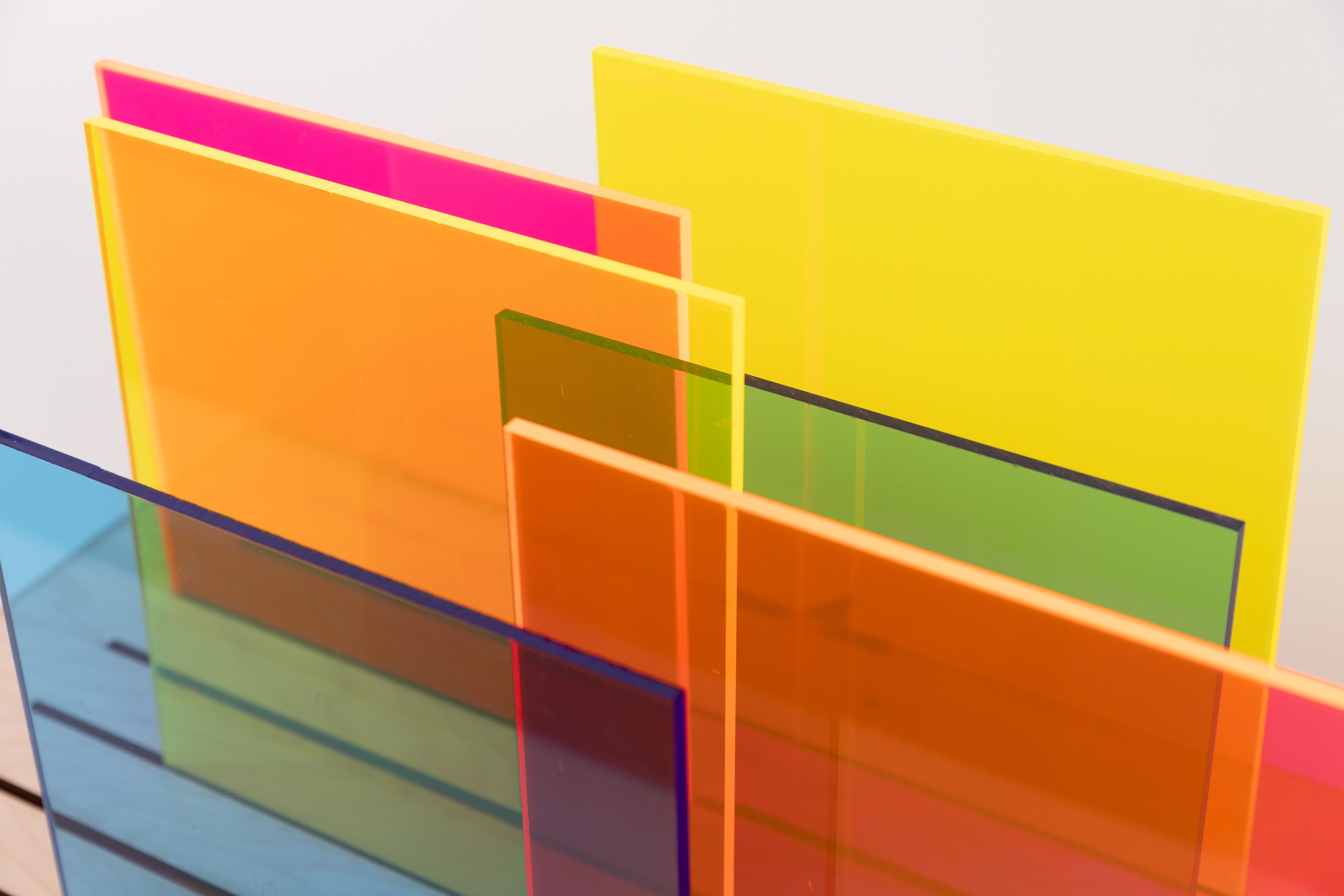
Our quest to merge color and sound yielded a result that surpassed our expectations. By leveraging the transparency of acrylic, we embarked on a mesmerizing exploration of color harmony and auditory delight. Each hue found its musical counterpart, creating a symphony of sensations that resonated with both the eyes and ears.
To illuminate the enchanting process of color mixing, we initially positioned an extra light behind the product, casting a radiant glow on the interplay of hues. However, a serendipitous discovery during our presentation transformed our perception. Placing the light in front of the product altered the projection on the wall, casting our creation in a new light—quite literally.
V2: User Testing and Iterative Refinement
Before advancing further, we conducted user tests and gathered valuable feedback from fellow students, offering insights into what resonated and what could be enhanced. During the presentation, an illuminating realization dawned upon us: the project's potential extended beyond the confines of its box.
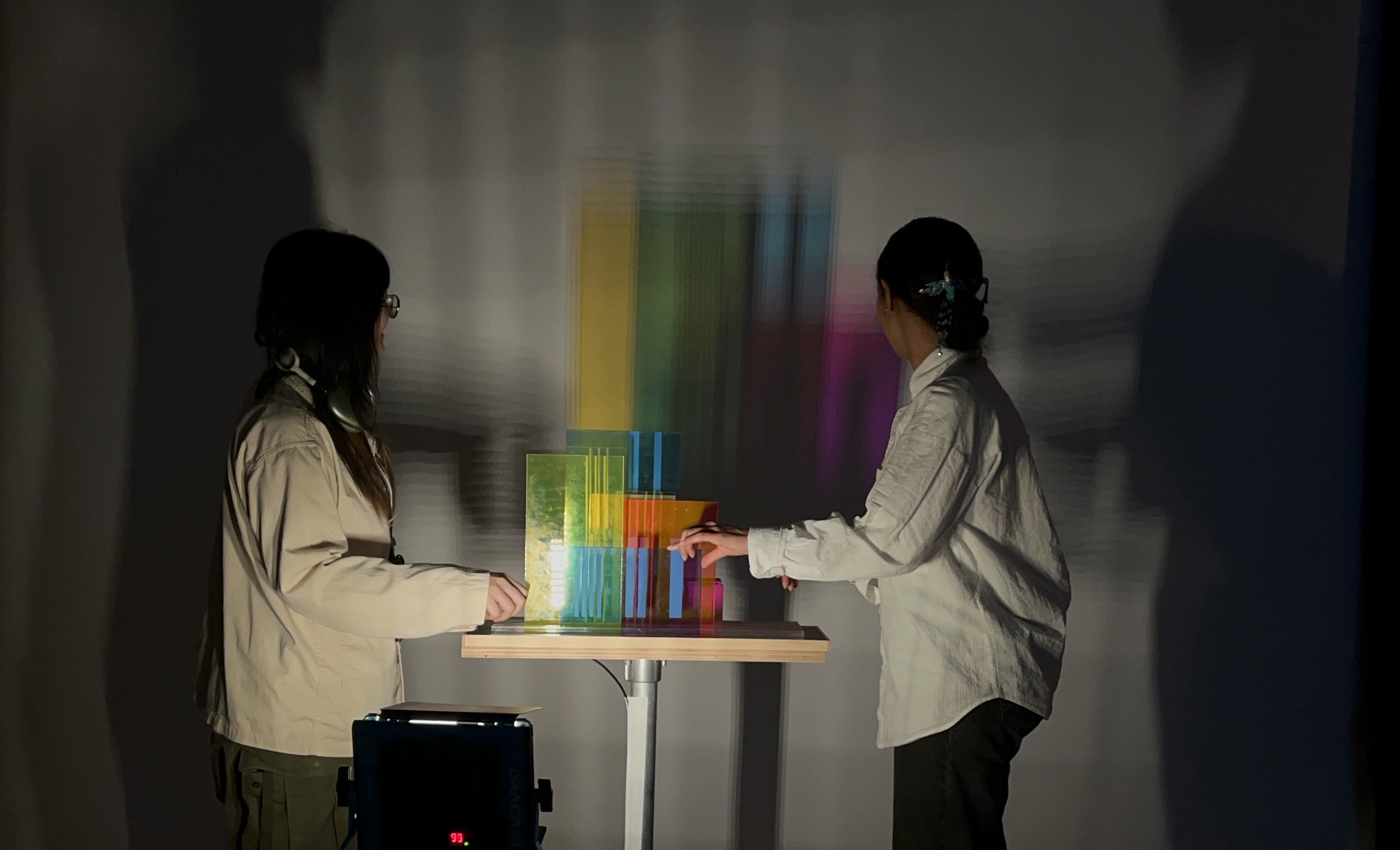
In a darkened space, a powerful light transformed our creation into a mesmerizing spectacle, projecting intricate color mixtures onto the surrounding walls, captivating audiences with dynamic projection mapping. Encouraged by the enthusiastic reception, we resolved to explore this newfound avenue.
Ideation / Prototyping / Material Choice
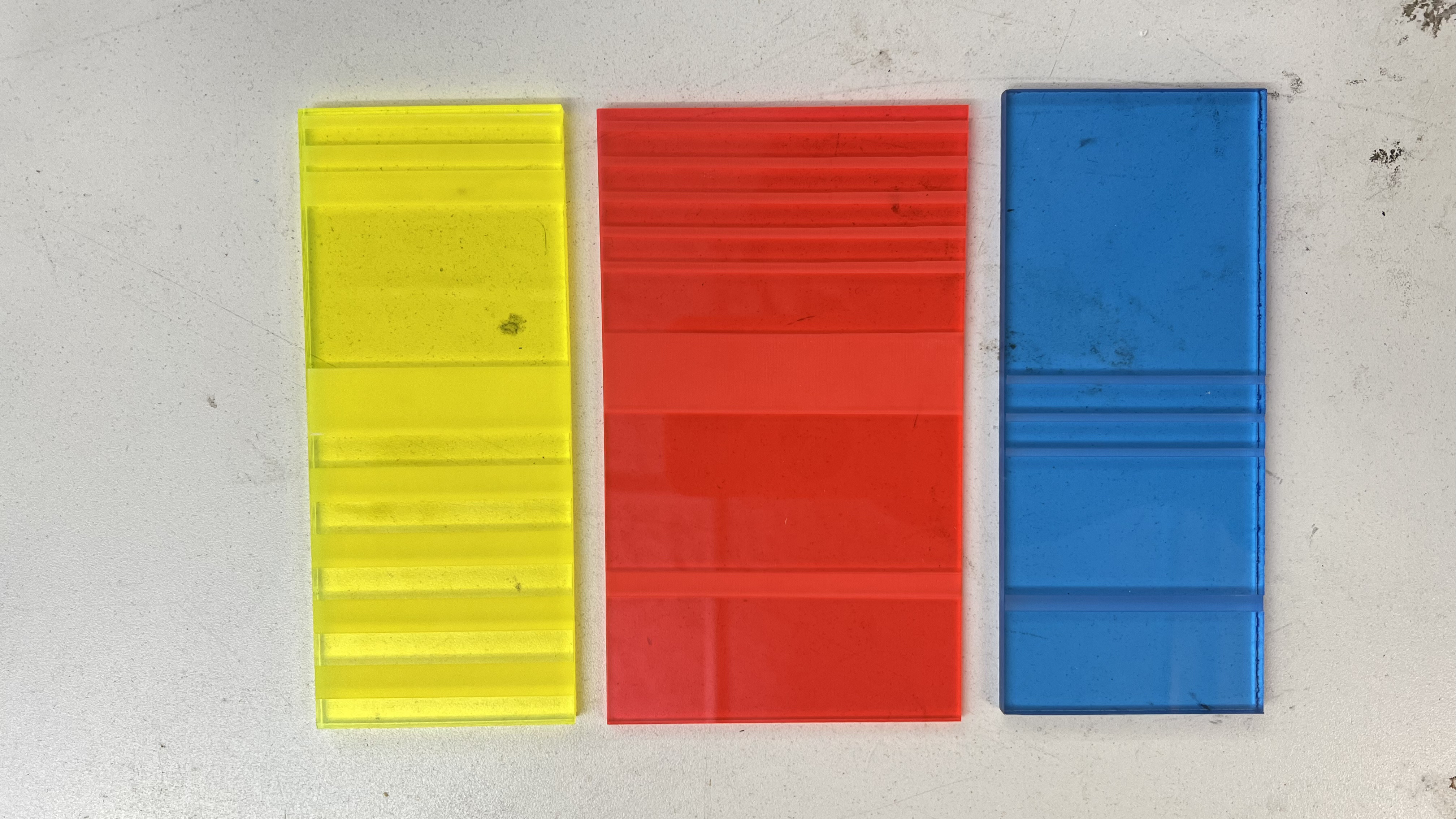
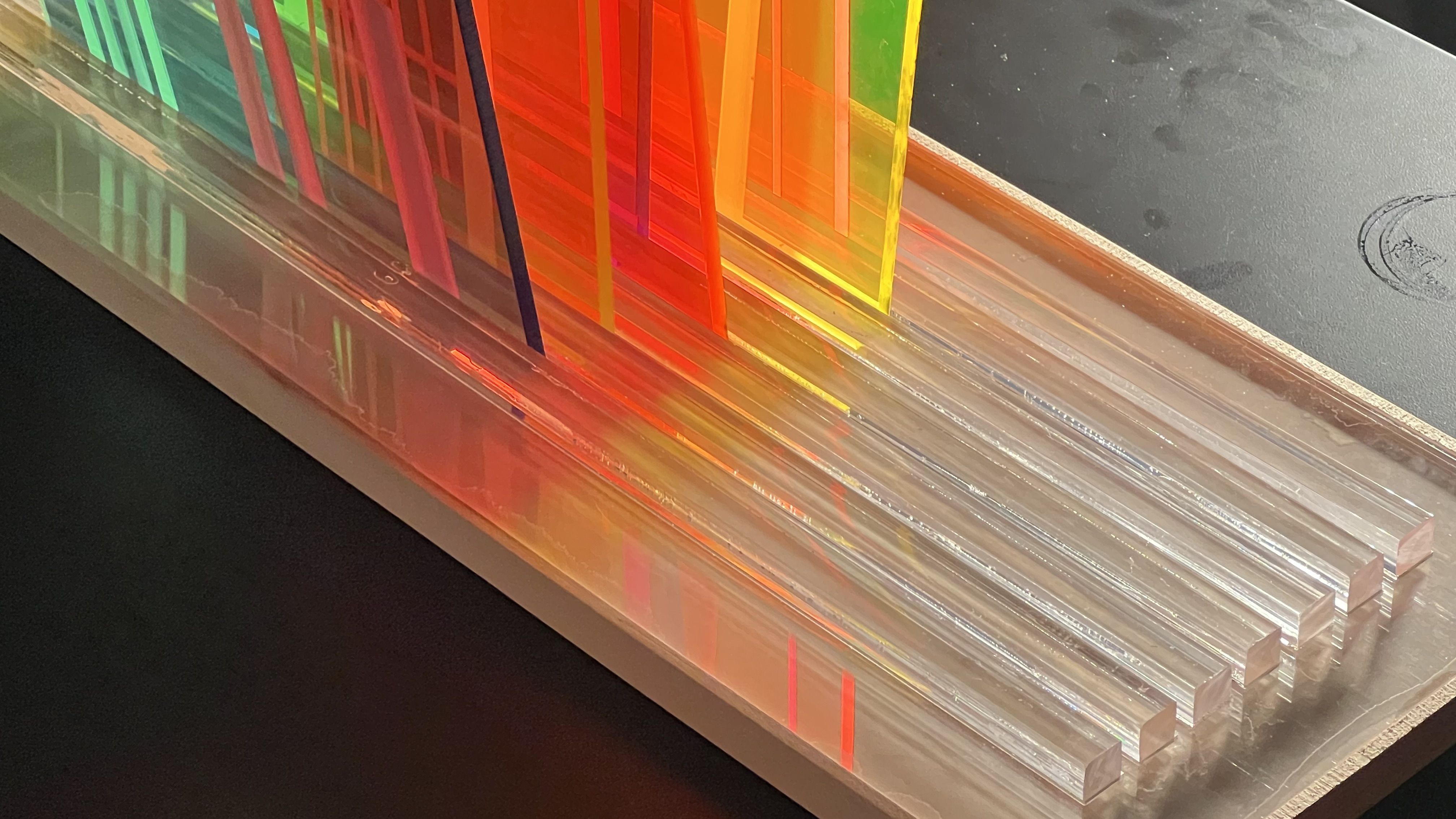
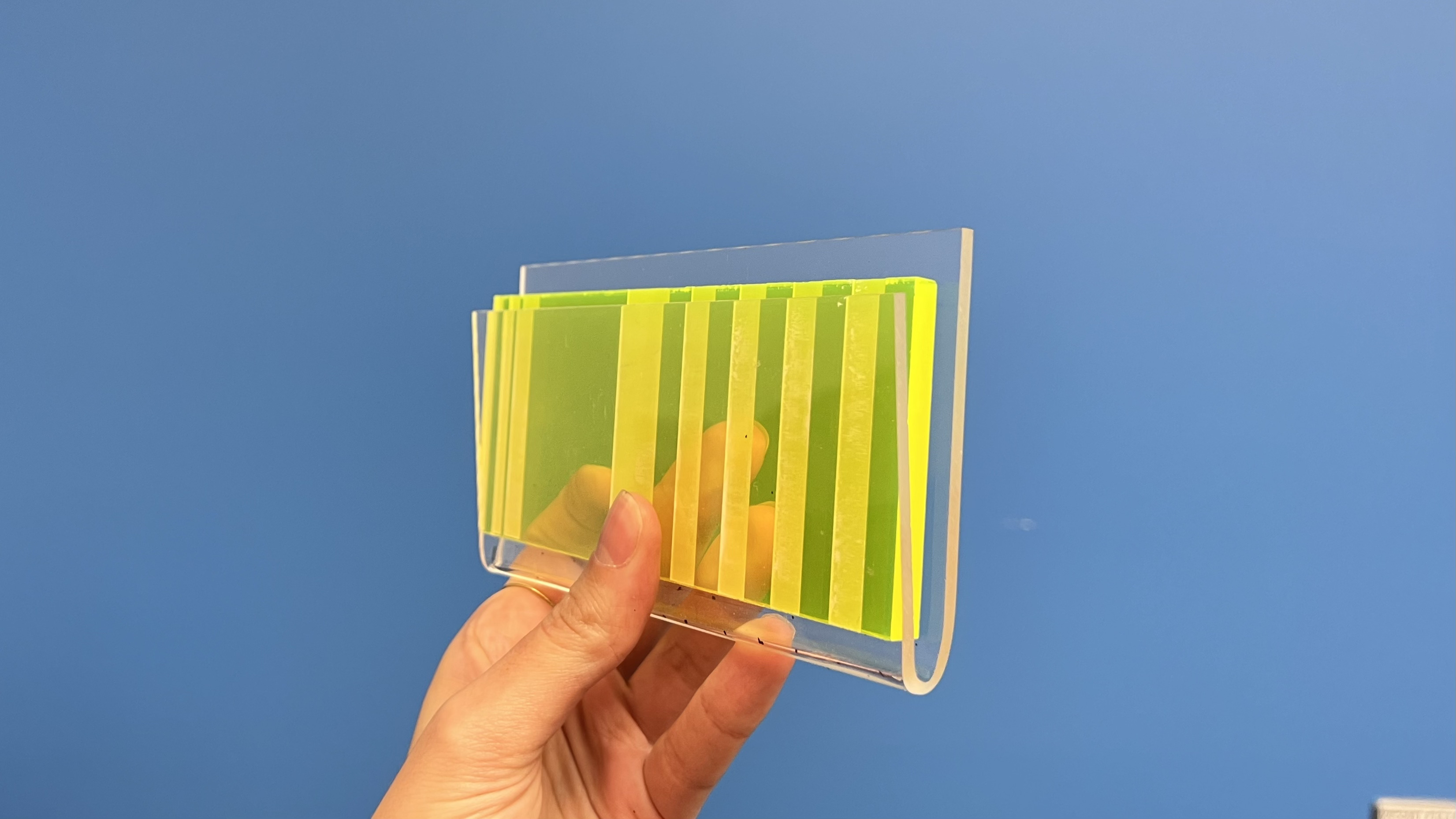
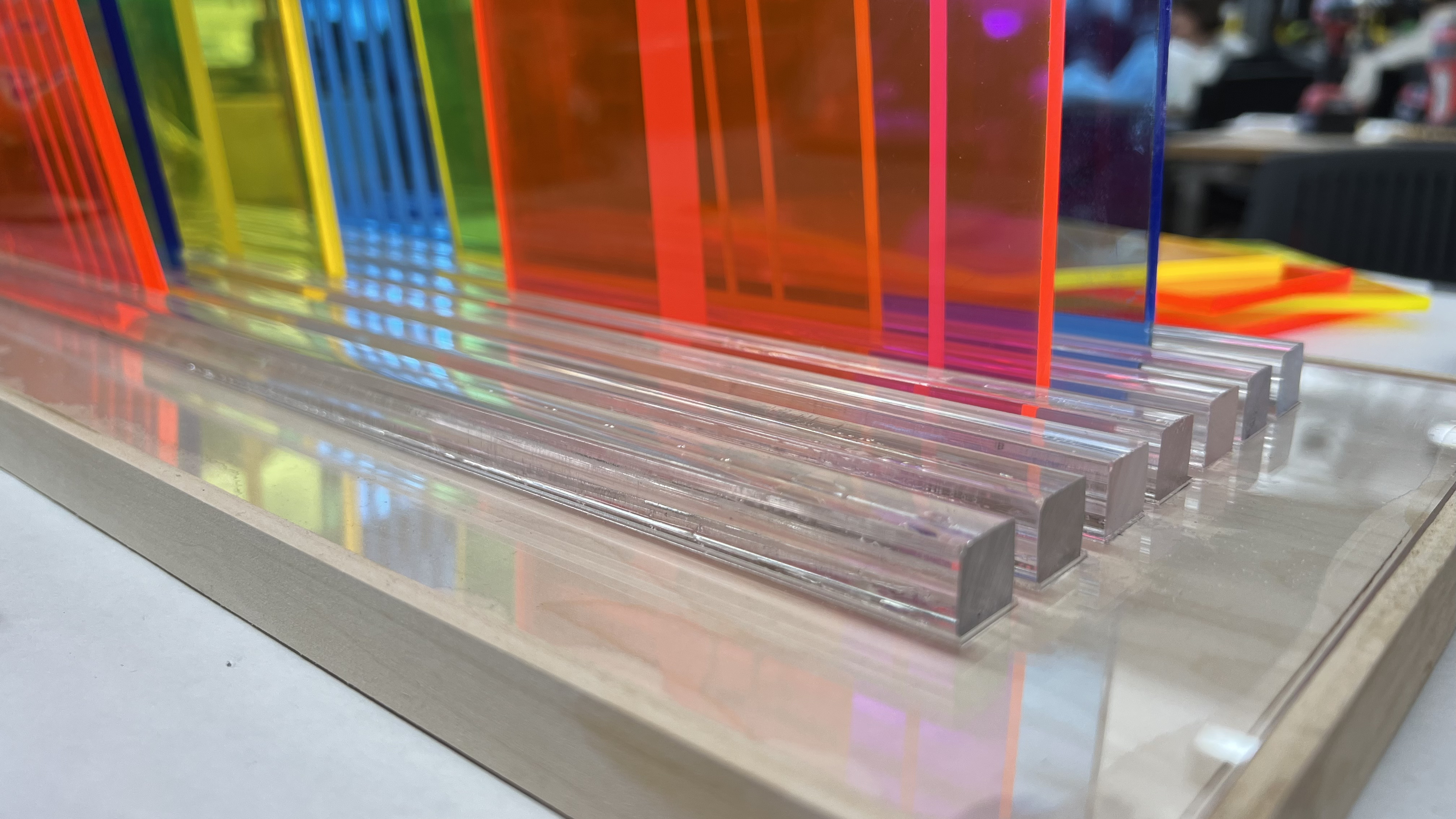
Our journey towards user-focused design began with ideation, aiming to make our project more accessible and engaging. Using the laser cutter, we introduced engraved elements into our materials. These subtle details, undetectable by sensors, added rhythm to the surface, turning color interactions into melodic harmonies.
This innovation made the experience more tactile and immersive, encouraging participants to explore and interact with greater ease and expression.
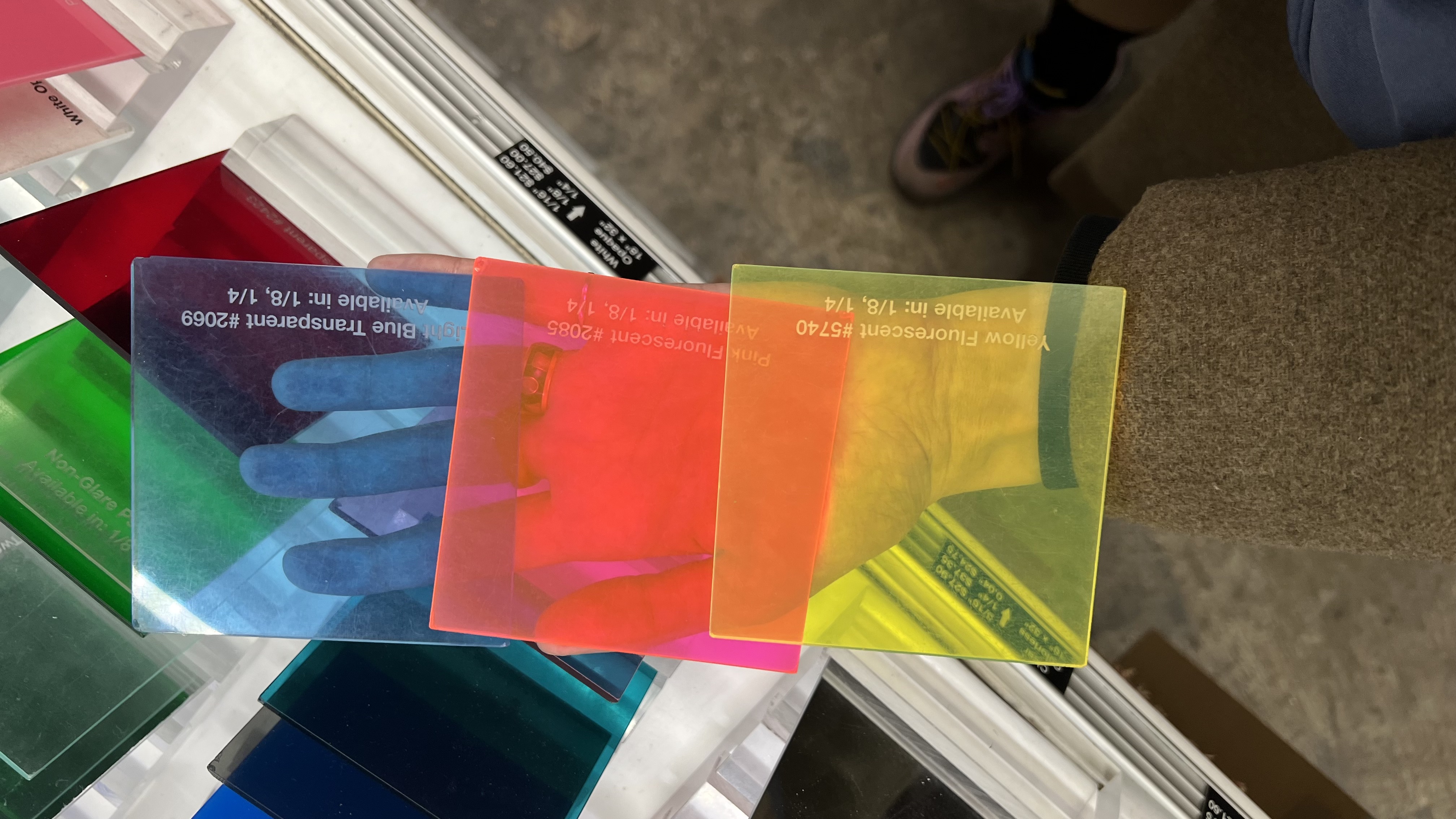
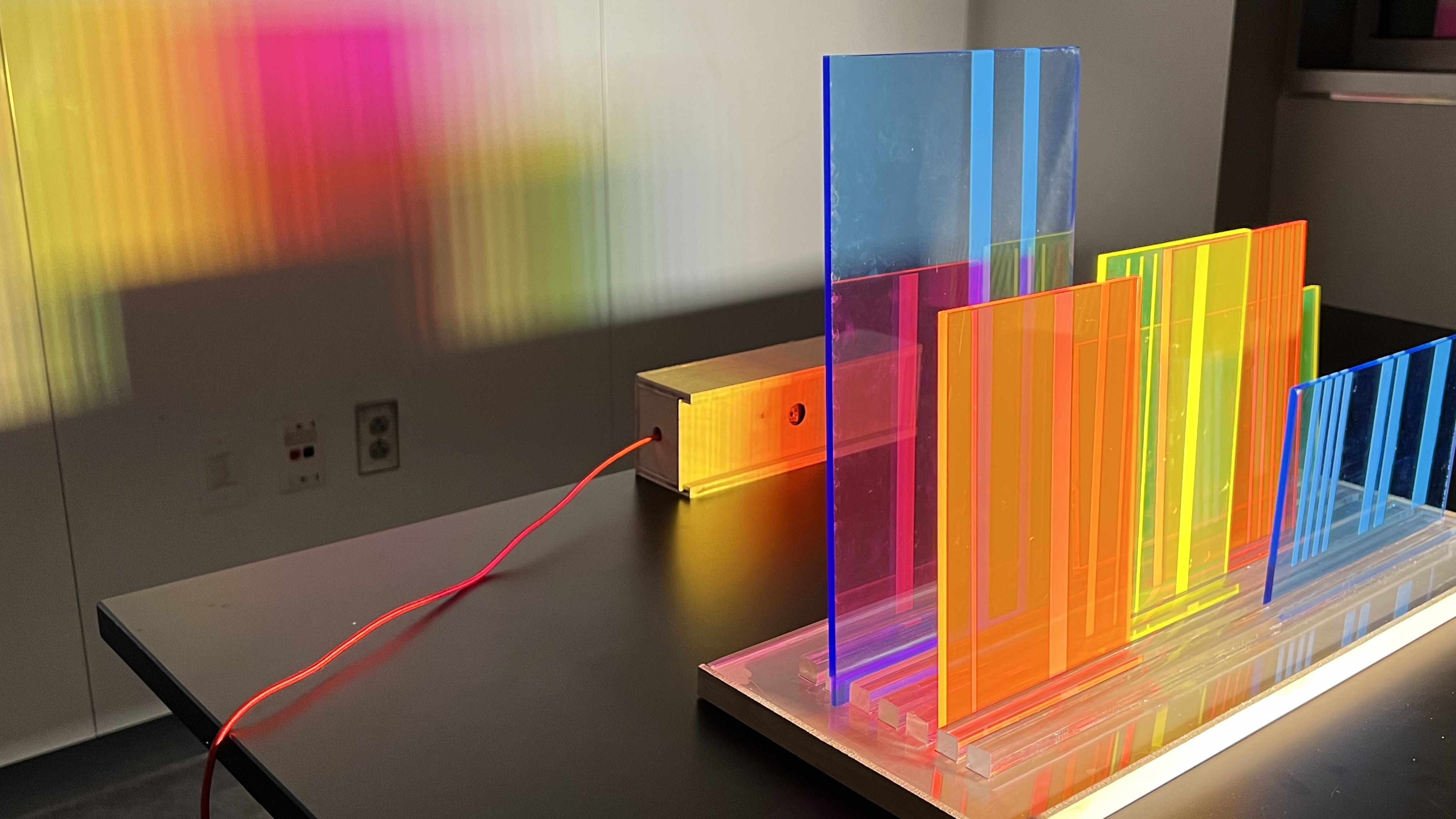
While retaining our foundation of acrylic plastics, we embarked on a journey of material evolution, experimenting with new colors and dimensions to refine our aesthetic vision. Countless iterations yielded a breakthrough: a small prototype showcasing effortless sliding transitions between acrylic sheets, seamlessly integrating form and function. The decision to relocate the sensor, freeing it from the confines of the box, further liberated our design, enhancing versatility and accessibility.

Prototyping and Multi-sensory Integration
Prototyping became our crucible of innovation, as we iteratively refined our concept, reshaping not only its visual identity but also its underlying mechanics. We diverged from convention, separating the light, object, and sensor into distinct layers, thereby unlocking a multidimensional sensory experience.
Each acrylic sheet became a canvas for creativity, empowering participants to orchestrate their own symphony of color and sound. Meanwhile, our strategic layering of visuals fostered a rhythmic narrative, guiding participants through an immersive journey of exploration and discovery.